Clover
Social Innovation · Venture Strategy · User Research · Product Strategy
A preventative social connection platform helping adults aged 55-65 find the right people, places and communities before isolation becomes entrenched.
Background
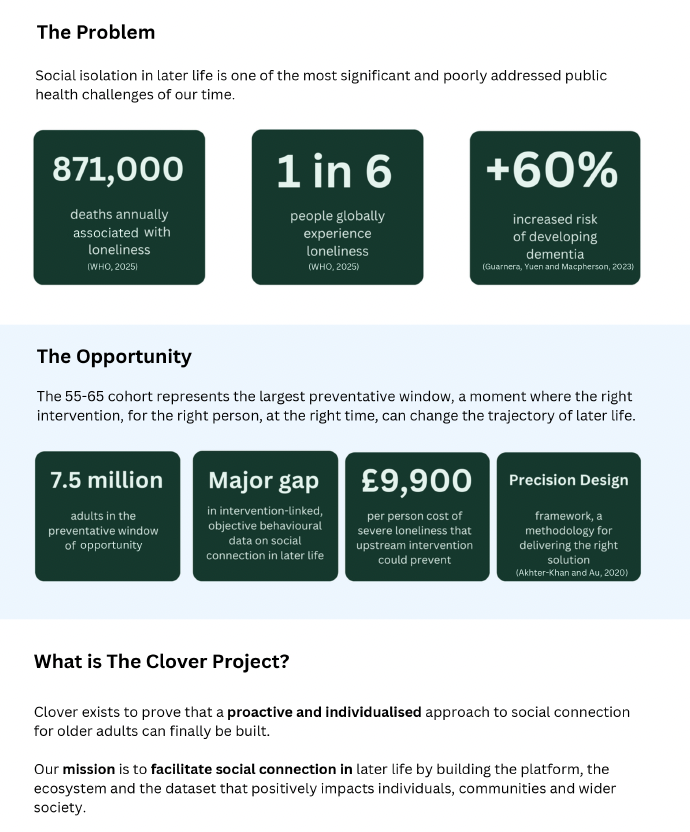
The problem starts before people identify themselves as lonely.
Clover began with a question: what if social isolation could be addressed earlier, at the moment someone’s routines and relationships begin to change?
The project focuses on adults aged 55-65, a life stage where retirement, bereavement, caring responsibilities, health changes and shifting family structures can quietly reshape someone’s social life. Rather than waiting until loneliness becomes visible, Clover positions this stage as a preventative window.
Problem and Opportunity
Overview
A social health platform, not just an events app.
Clover connects people to relevant local activities while helping community venues create better social programming. The platform works across three layers: individual recommendations, host infrastructure and aggregated social insight.
User App
Personalised onboarding, event discovery, route clarity, reminders and confidence-building tools that make attending easier.
Host Dashboard
A venue-facing tool that helps cafés, pubs and community spaces turn quiet hours into local social infrastructure.
Data Observatory
Aggregated behavioural insight that can support research, policy, social prescribing and local authority decision-making.
My Personal Role
I helped turn a broad social issue into a clear venture proposition.
My role sat across research, strategy, product thinking and business modelling. I focused on translating human insight into a product and venture model that could be tested, explained and scaled.
Research Synthesis
Connected desk research, user insights, expert interviews and field observations into a sharper opportunity.
Product Strategy
Helped define Clover’s onboarding, matching logic, attendance support and host-facing experience.
Secondary Research
Mapped loneliness, social isolation, public health costs and intervention failures.
Venture Design
Built the case around stakeholder incentives, market sizing, revenue streams and acquisition strategy.
Storytelling
Shaped the narrative so the project could be understood as a credible social innovation venture.
Research Process
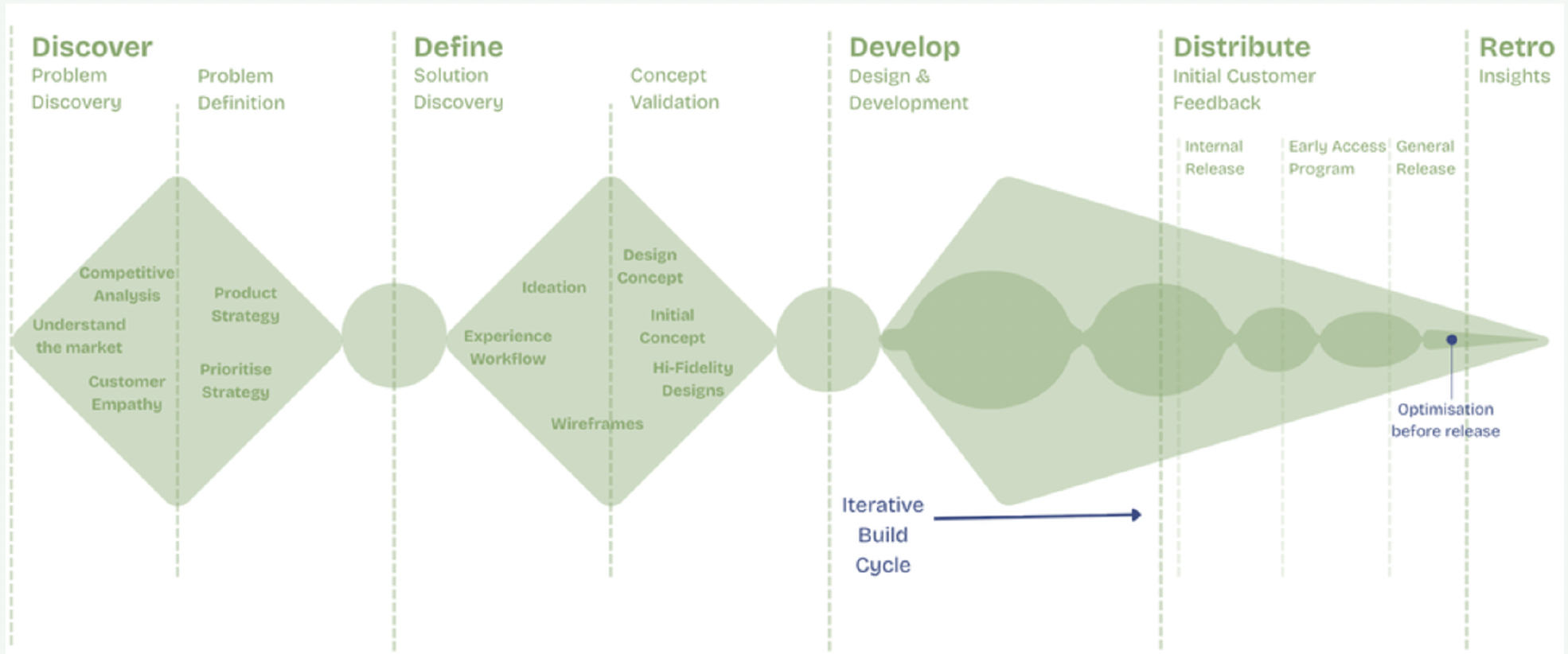
The process moved from evidence to lived experience to prototype testing.
The team used mixed methods to avoid designing from assumption. We combined academic research, expert interviews, participant observation, user testing and venue validation.
Expert Interviews
Spoke to people working across community, advocacy, behavioural science and social enterprise.
Field Observations
Observed how older adults discover, access and experience community spaces.
Wire framing testing
Tested product flows around onboarding, recommendations, trust, confidence and attendance.
Triple Diamond Framework for Research
Key Findings
People do not just need more events. They need relevant, trusted and repeatable connection.
The most important insight was that access is emotional as well as practical. A person might know an event exists but still not attend because the setting, route, language or social context feels uncertain.
Trust reduces Friction
People are more likely to attend when they know what to expect, who is going and how to get there.
Loneliness language stigma
Clover needed to frame itself around positive social wellbeing rather than deficit or decline.
Local context matters
A city is not one audience. Neighbourhoods have different identities, venues, transport patterns and social habits.
Routine prioritisation
Lasting impact depends on repeated participation, not a single attendance moment.
Heterogenized Older Adults
Confidence, mobility, interests, time, income and social appetite vary widely within the same age group.
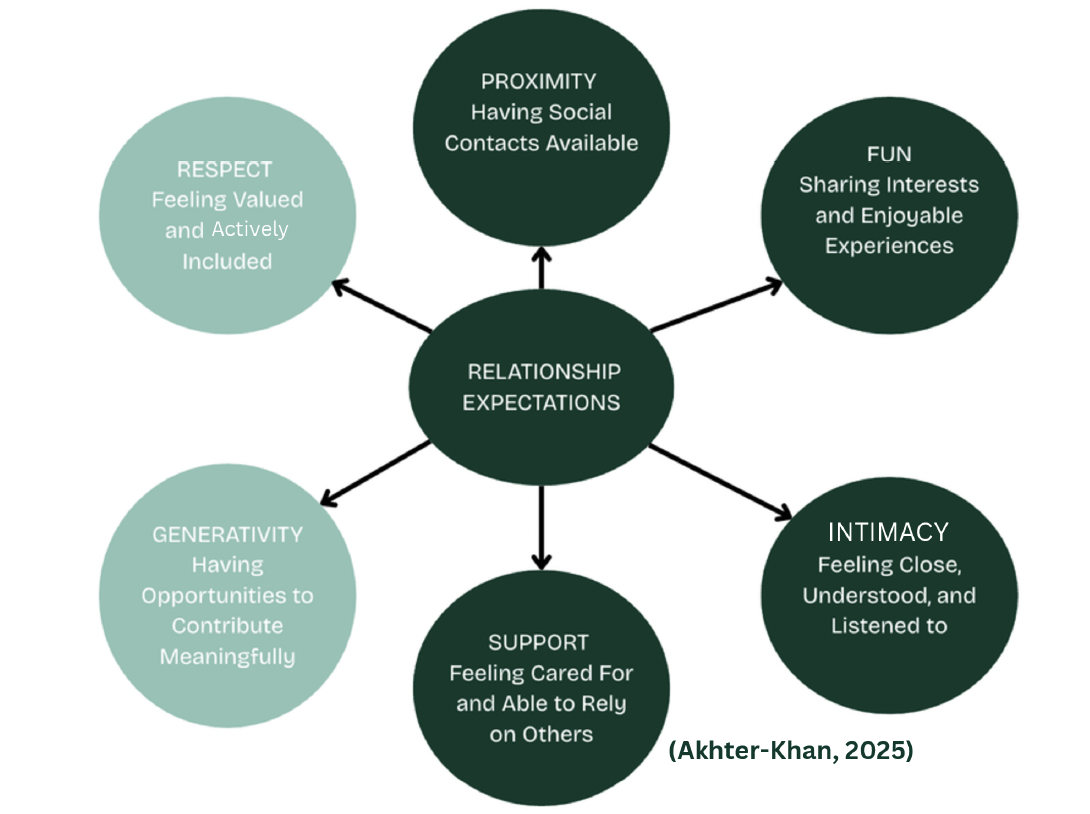
Right Match Expectation
Social need can be about fun, support, proximity, intimacy, respect or generatively, not simply companionship.
Six Expectation Framework
Impact
Clover was designed to create impact at three levels.
The platform links individual behaviour change with stronger community infrastructure and wider evidence generation.
Micro
Help individuals build confidence, attend relevant activities and form repeated social habits.
Meso
Help venues and community hosts create programming that responds to real local demand.
Macro
Generate aggregated insight that supports research, policy and preventative public health decisions.
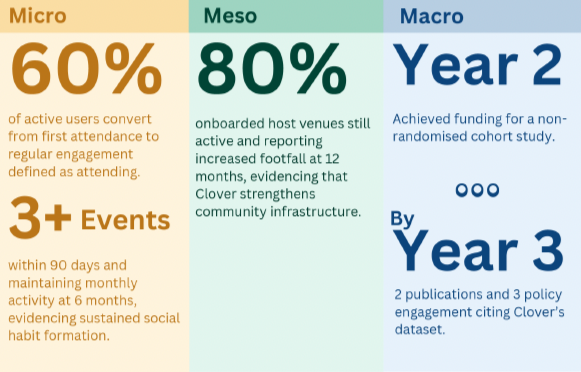
Impact KPIs
Results
The final output was a working venture proposal with a live prototype.
By the end of the project, Clover had moved from a research problem into a structured platform concept with product logic, stakeholder strategy, market model, financial plan, risk analysis and impact framework.
160K - Year 6 target users in the model
£472K - Project year 6 revenue
76% - Average projected gross profit
8 - Modelled revenue streams
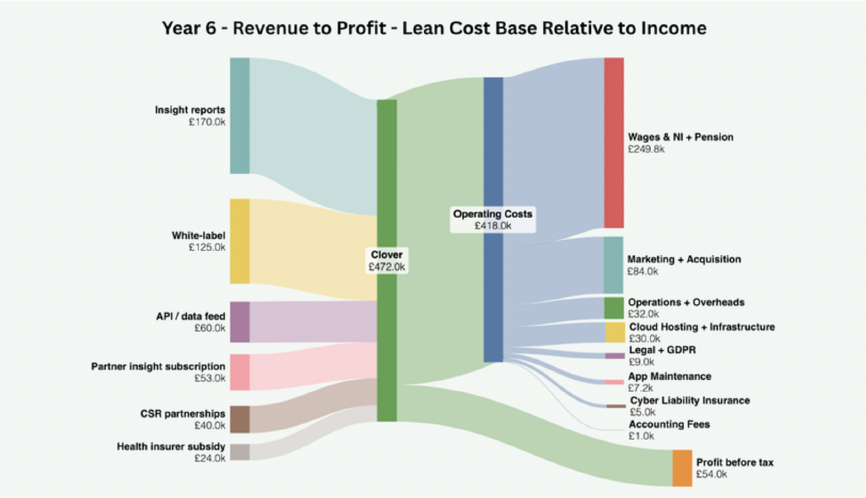
Cost & Revenue in Y6
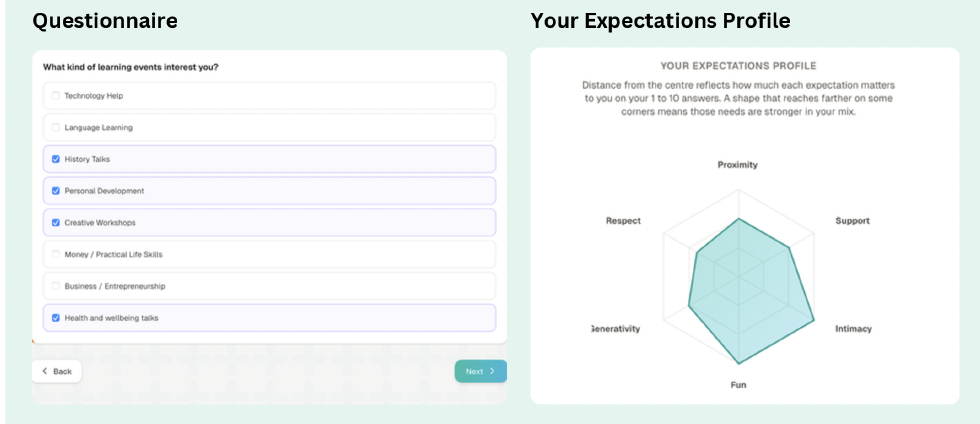
1.Personalisation Via Onboarding Questionnaire
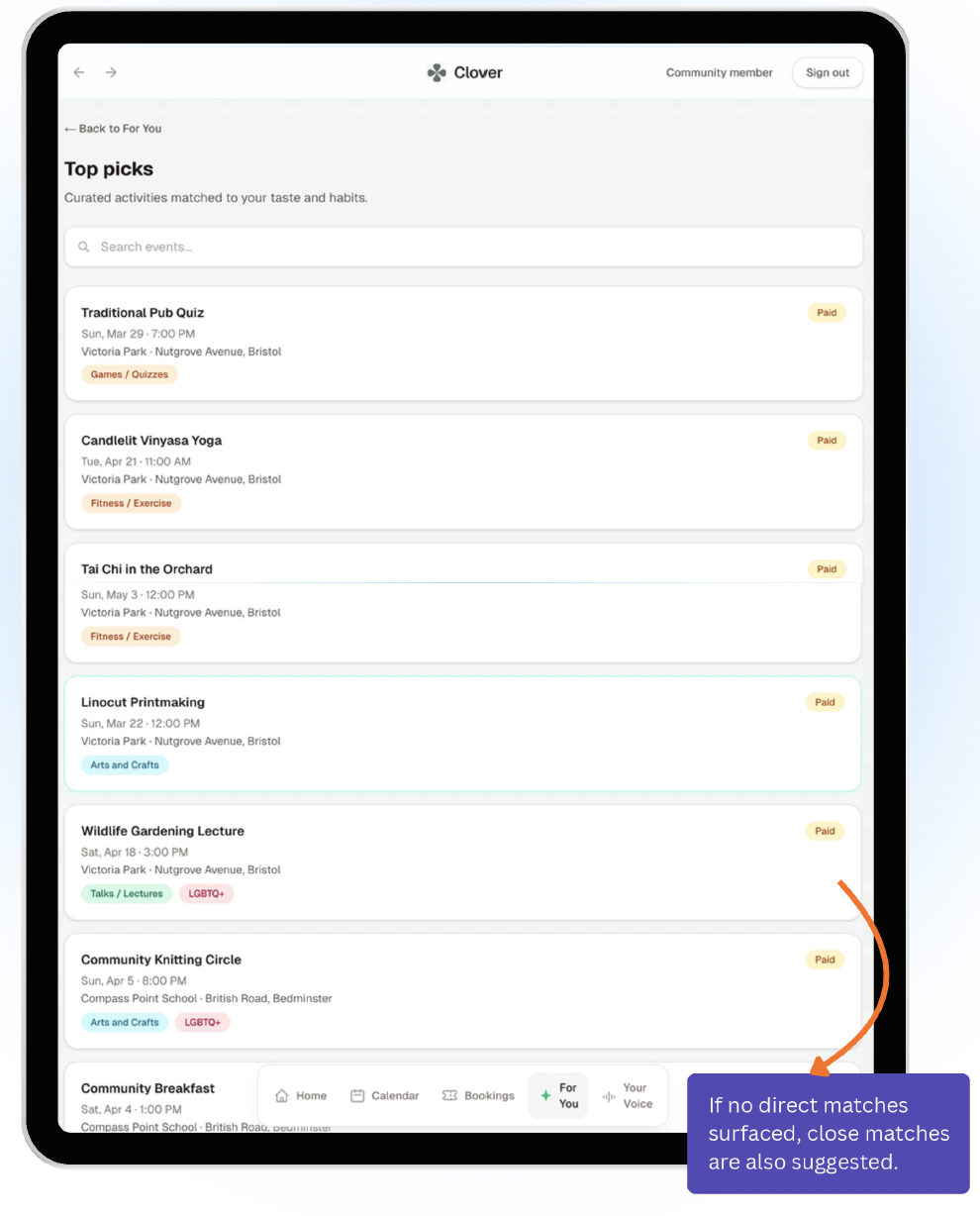
2.Close-match recommendations
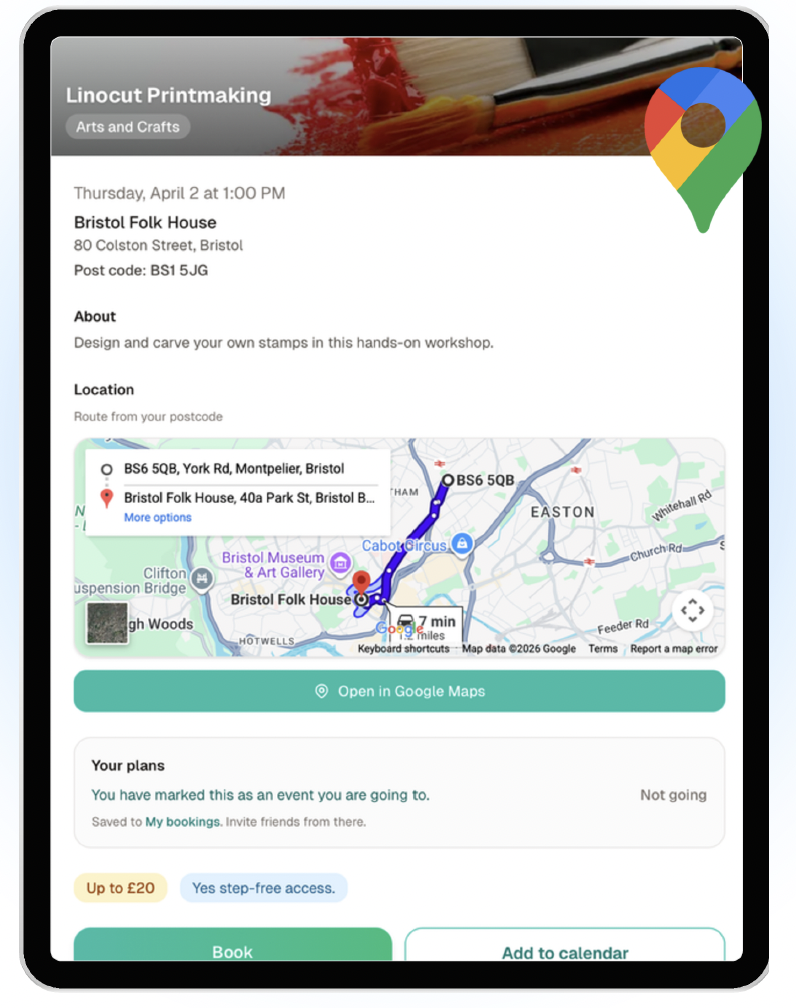
3.Reduction of friction - Ease in knowing how to get there
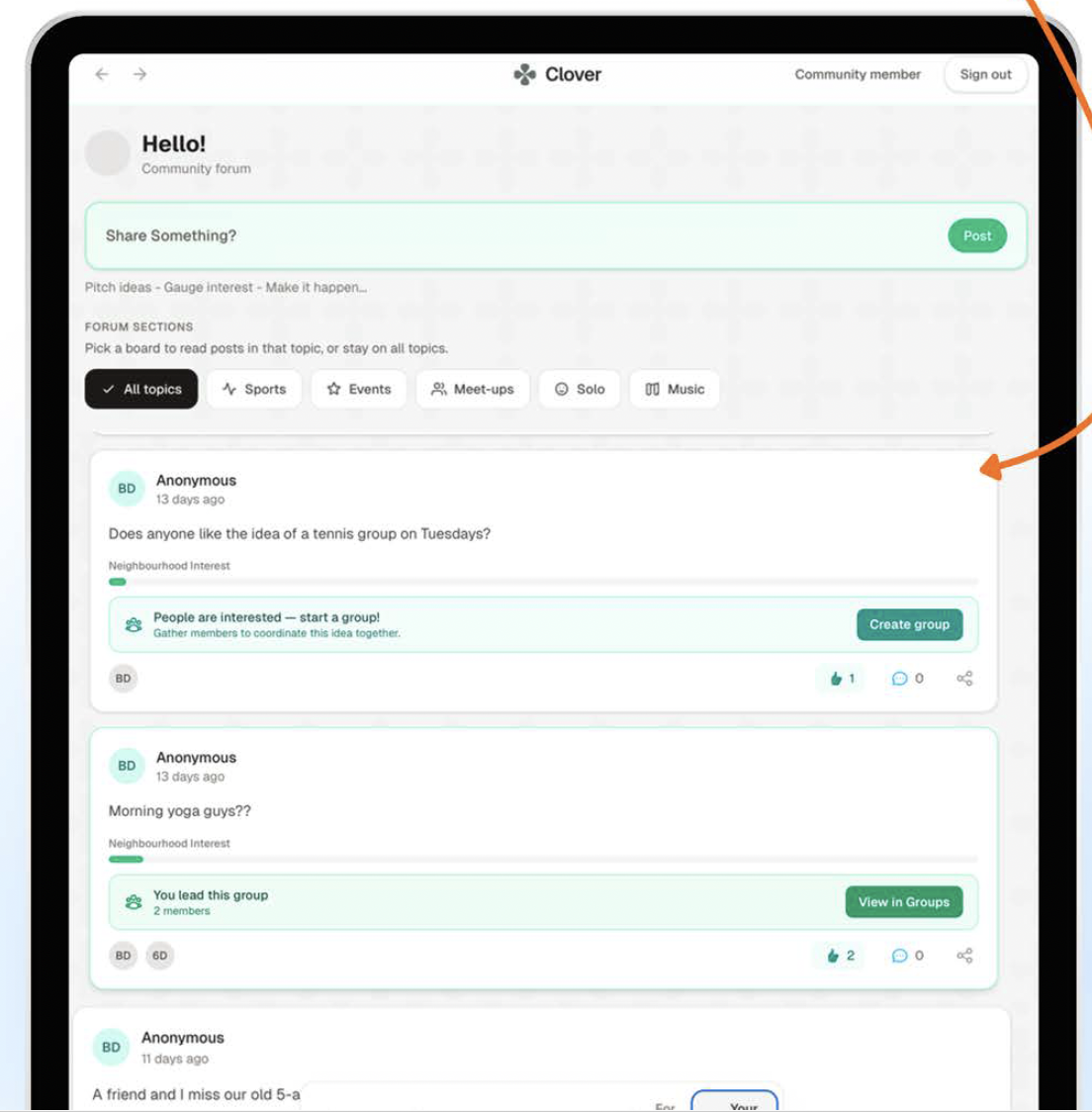
4.Our Voice - Allows option for users to provide new activities and opinions
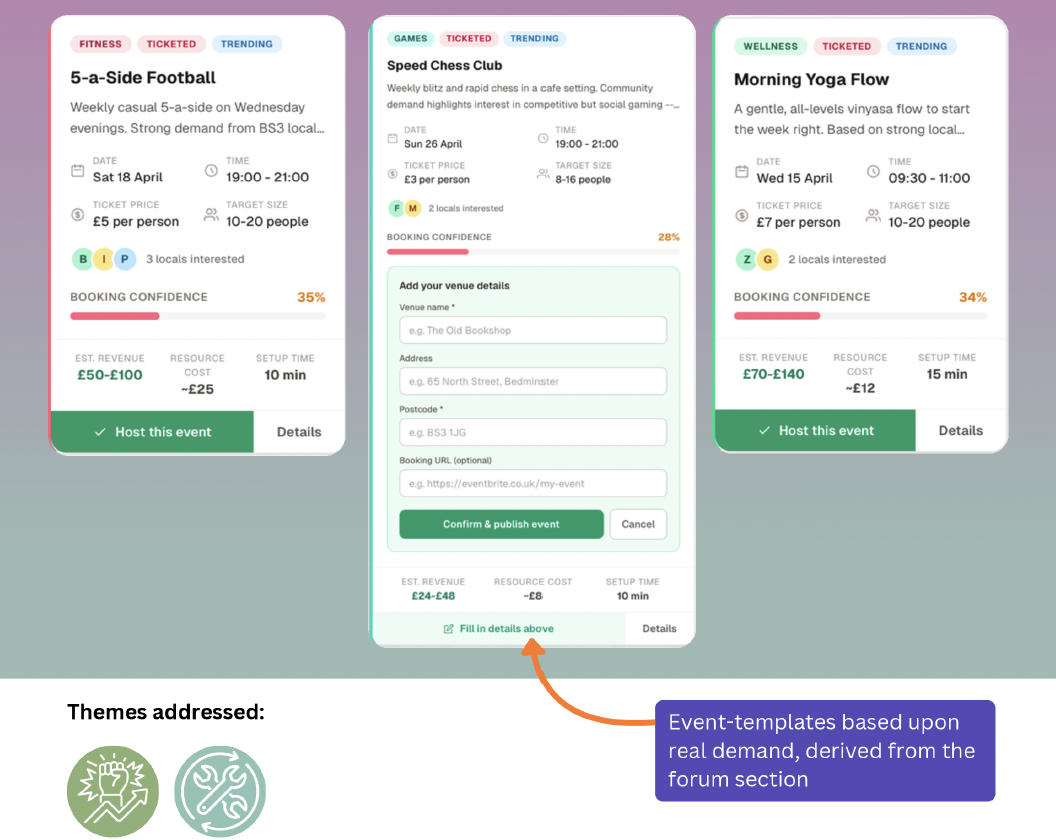
5.AI hosting section - Reduce friction for hosts to find activities to host
Learning
Clover strengthened the way I work as a strategist.
The project taught me how to hold complexity without losing clarity: starting with messy human behaviour, then turning it into a focused strategy, product and venture story.
Strategic synthesis
Turning broad research into a clear opportunity, proposition and market position.
Product thinking
Translating insights into onboarding, matching, dashboards and retention loops.
Ethical design
Handling sensitive topics through low-stigma language, consent, trust and responsible data use.
Human-centred research
Using interviews, observation and testing to understand what people actually need.
Commercial judgement
Connecting desirability with viability through market sizing, revenue and risk planning.
Communication
Making anthropology, public health, product strategy and finance feel like one coherent story.