Client Collaboration. Human-centred AI. Dementia Care.
Native Design - ConnecTable
AI Strategy · Service Design · Research · Health Innovation
A design research project exploring how generative AI can support richer social interaction in dementia care without replacing human care.
Background
The challenge was to find where generative AI could create real value inside dementia care.
Native Design already had the technical capability and a stake in smart spaces, but the opportunity needed to sit in something care homes actually lacked: unhurried, quality social interaction between caregivers and residents.Context
Care homes are under pressure from staffing, administration and limited time for high-quality social interaction.
Problem
Many activities can become repetitive or passive, while AI risks feeling cold or replacement-led if designed badly.
Opportunity
AI could become a facilitator of shared activity, memory prompts and creativity, while keeping caregivers central.
Project Description
ConnecTable is a physical-digital table combining a shared digital surface, physical game and art tools, AI-generated prompts and a caregiver control app to create meaningful social and creative experiences for care settings, where board games adapt dynamically for group engagement, art mode enables shared creative and emotional expression, and caregivers retain full control without the technology displacing the care itself.
My Role
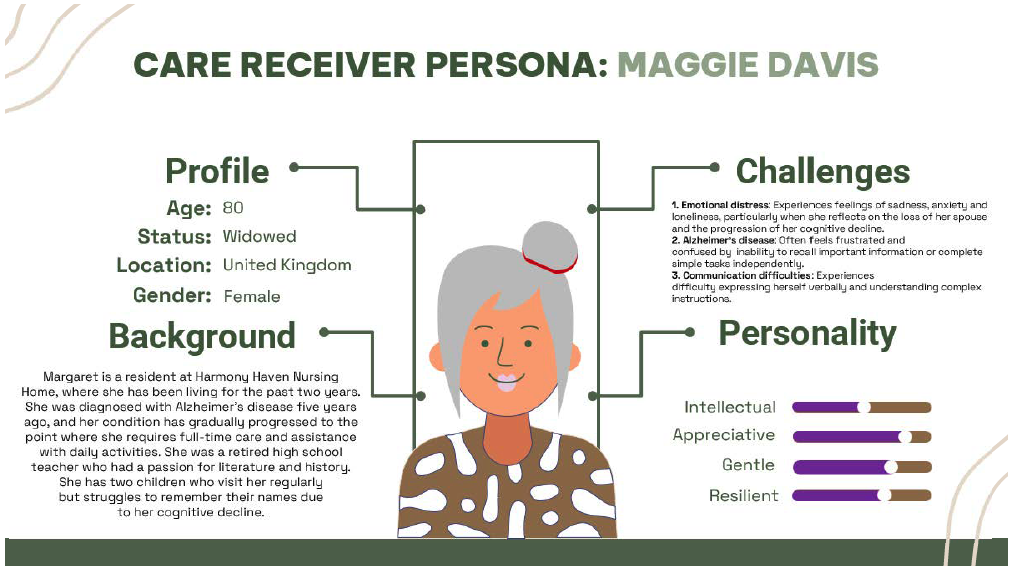
I translated lived experience into strategic design direction by conducting primary research with caregivers and professionals, synthesising findings through stakeholder maps, empathy maps, personas and journey maps, and helping pivot the project from workload reduction toward facilitating social engagement, while reflecting on how my own positionally shaped interpretation when designing for older adults and dementia care.
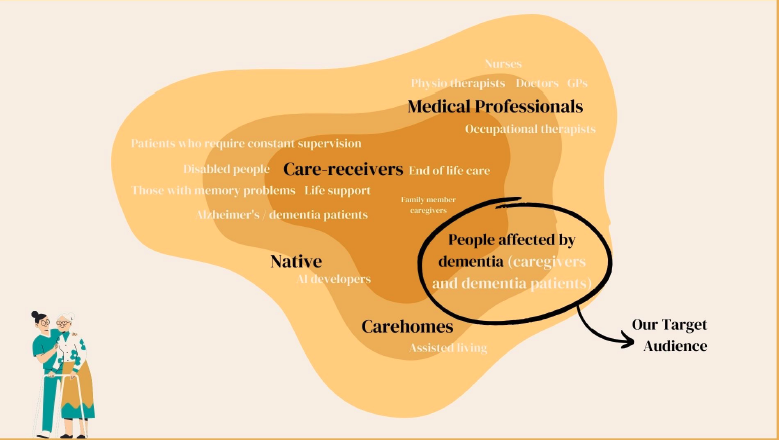
Stakeholder Mapping
Discover
Researched dementia care, AI adoption, care-home routines, stakeholder needs and barriers to technology trust.
Synthesise
Built affinity maps, stakeholder maps, empathy maps, personas and journey maps to identify repeated patterns.
Ideate
Developed Adaptiverse, Vis-Stim and Connect before combining the strongest ideas into ConnecTable.
Prototype
Tested game tools, art mode and a caregiver control app to evaluate interaction, usability and care fit.
Process
The process moved from a broad AI brief to a focused care experience.
We used secondary research, interviews, survey responses and collaborative synthesis to move from the general topic of AI in health management into a more precise design opportunity.
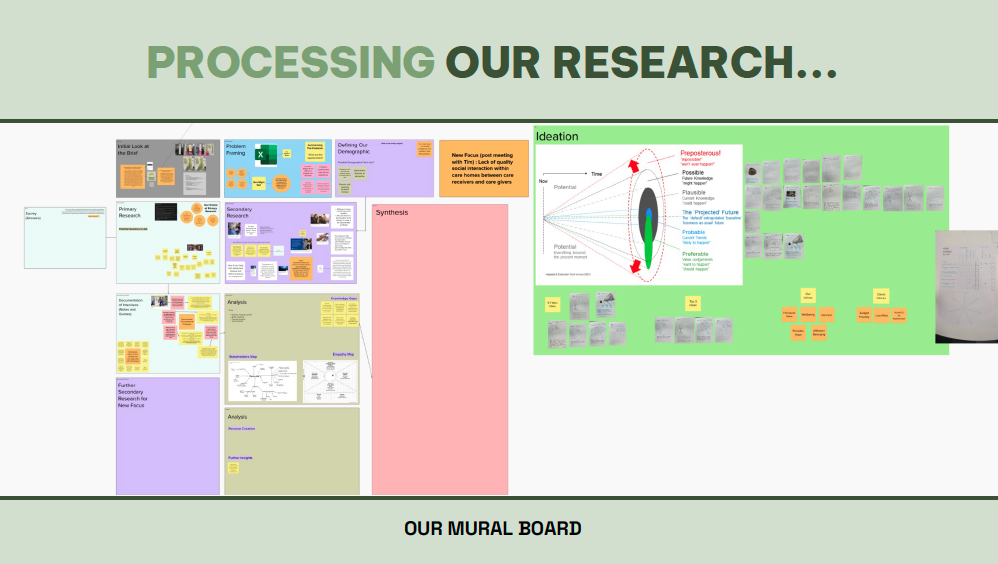
Research Process
Research Findings
AI was most useful when it became an interface between people.
The strongest insight was that AI should not replace care. It should support caregivers by creating richer shared experiences for people living with dementia.
Research insight
Caregivers are under pressure from administrative work, limited time and high emotional labour.
Design response
The caregiver app helps facilitate activities efficiently while keeping human supervision central.
Research insight
Technology adoption depends on trust, education and clarity about the role of AI.
Design response
The concept frames AI as a support layer that generates prompts and variation, not as a replacement for care.
Research insight
Care homes need deeper social interaction, not just more entertainment or passive activities.
Design response
ConnecTable creates shared group activities that encourage conversation, memory and participation.
Research insight
People living with dementia benefit from tactile, sensory and familiar interaction.
Design response
The concept uses physical tools, art materials and board-game pieces rather than relying only on a screen.
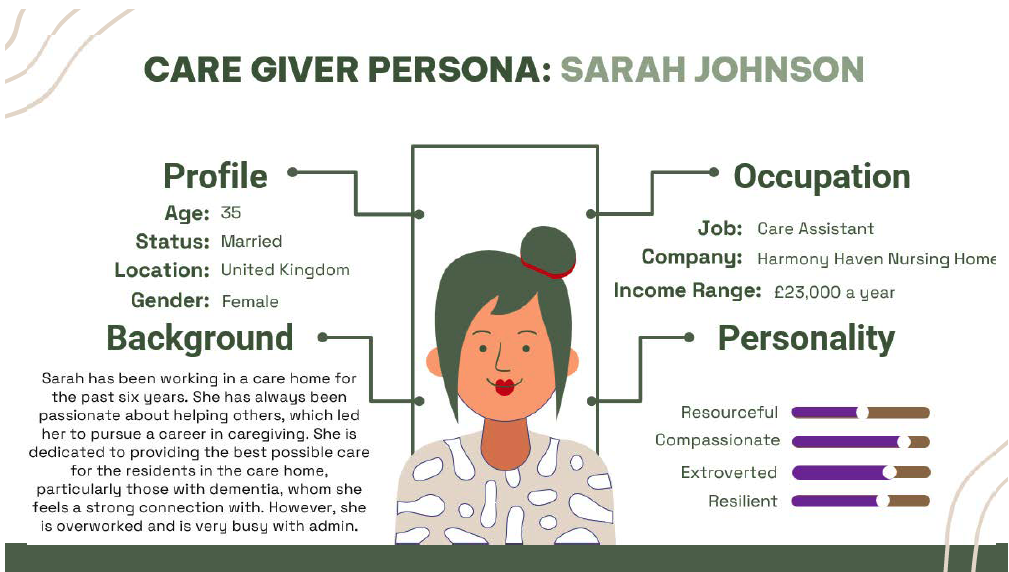
Persona Caregiver
Persona Care Receiver
Final Concept
ConnecTable turns AI into a shared physical experience.
The final concept combines two stronger ideas — AI-adaptive board games and AI-assisted art therapy — into one table that supports play, creativity and connection.
Play
Board Game Mode creates adaptive games that support group activity and conversation.
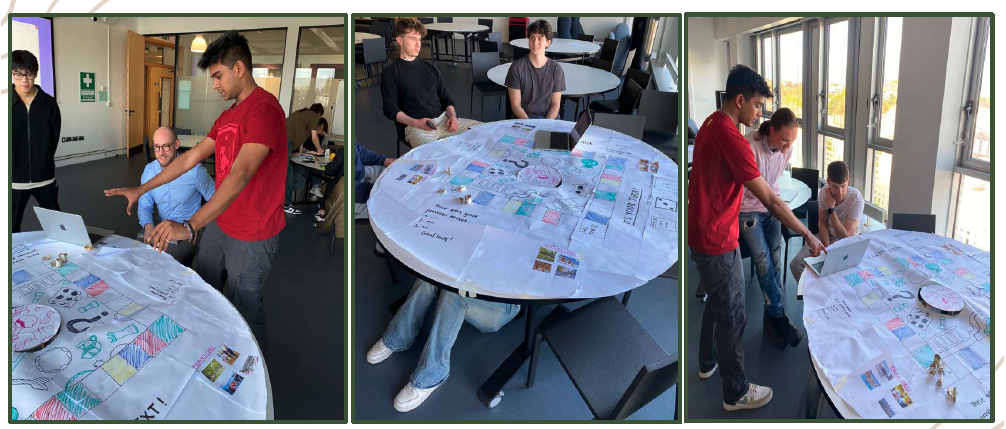
Final Prototype concept
Create
Art Mode uses AI-assisted visual prompts to support expression, memory and sensory engagement.
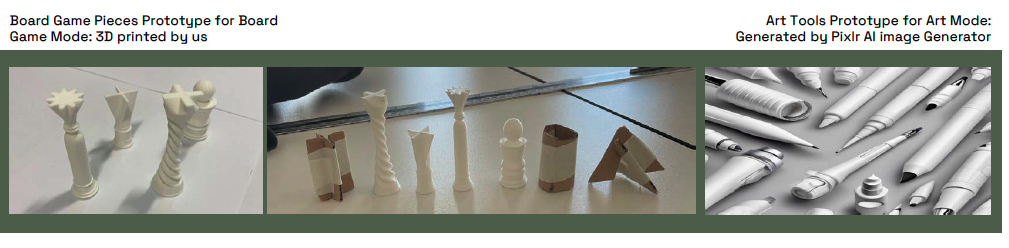
Physical game pieces used in ConnecTable for physical stimulation
Support
A caregiver app controls modes and accessibility settings so the experience remains safe and guided.
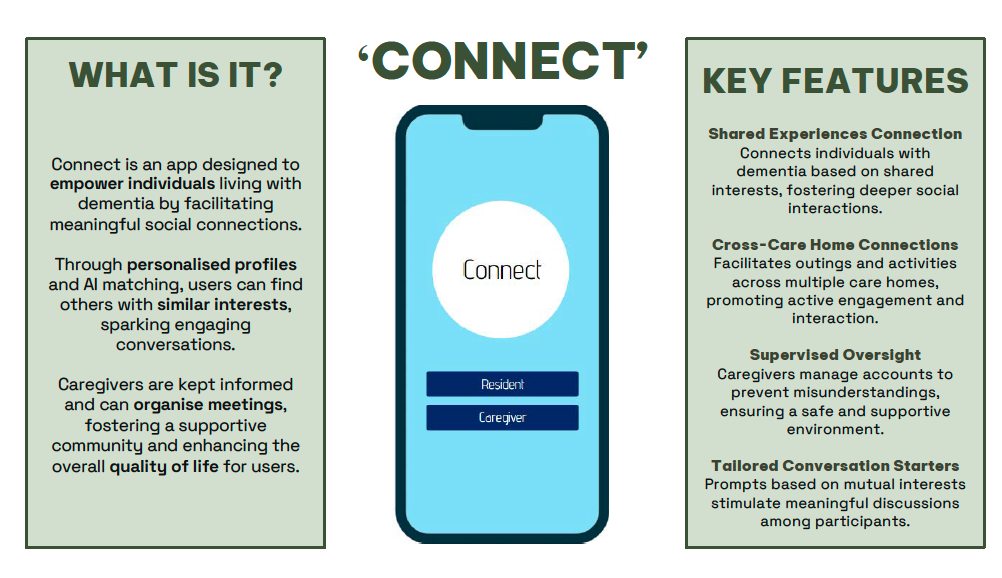
Control App designed with ConnecTable for Caregivers
Learning & Skills
The project strengthened my human-centred approach to AI strategy.
Native Design taught me that responsible AI design starts with people, relationships and context before technology.
Human-centred AI
Treating AI as a support layer for human relationships, not as the centre of the solution.
Ethical innovation
Designing with dignity, familiarity, accessibility and the limits of automation in mind.
Research-led pivoting
Moving from a broad health-management brief into a sharper social-interaction opportunity.
Strategic synthesis
Turning interviews, surveys, personas and journey maps into a clear design direction.
Physical-digital design
Combining tangible interaction with digital intelligence instead of defaulting to another app.
Reflexivity
Recognising how age, culture, class and positionality shape the way needs are interpreted.